Father’s Day is one of the most important seasonal events of the year for eCommerce businesses, marketplaces, and consumer brands. As every year, major companies make their moves weeks in advance: they update their landing pages, launch content campaigns, and above all, secure their presence in the digital outlets that concentrate purchase intent.
This year we wanted to do something different. Instead of just laying out the theory — which we already covered last year and we’ll recap below — we’re going to show you exactly how some of the brands that dominate this event do it year after year. Which URLs they work, which search intents they target, and most importantly, which media outlets they appear in to capture high-intent traffic and close transactions.
Because the goal of a solid Father’s Day strategy isn’t just to earn a link that boosts domain authority. It’s to achieve brand exposure, qualified referral traffic, and ultimately, the conversion. All of that together, at the same time.
How the big players do it: the El Corte Inglés case study
El Corte Inglés is Spain’s largest department store chain — think of it as a combination of Macy’s, Walmart, and Amazon, all under one brand. With over 80 years of history and more than 90 stores across the country, it’s not just a retailer: it’s a cultural institution. For millions of Spanish consumers, it’s the default destination for gifts, fashion, electronics, and pretty much anything else. That kind of brand weight translates directly into SEO authority, consumer trust, and conversion rates that most businesses can only dream of.
And yet, even El Corte Inglés doesn’t rely on brand power alone. Its marketing team has spent years applying a clear, replicable, and very well-executed strategy around seasonal events. It’s worth breaking down.
A URL that has been working for years
The first thing that stands out is their commitment to URL stability. Since at least 2021, El Corte Inglés has consistently ranked the same page:
🔗 www.elcorteingles.es/dia-del-padre/
They don’t create a new URL every year. They don’t redirect or change the slug. They keep the same page, update it with the season’s products, and let the accumulated authority do the heavy lifting. A decision that seems obvious but that many brands still haven’t made.
From that pillar URL, product-specific subcategories branch out: Fragrance, Jewelry, Electronics, Fashion… A clean architecture that lets them target more specific search intents without diluting the strength of the main page.

The search intents they target
From the main URL, the content strategy focuses on capturing searches with mixed intent: informational-transactional. Terms like “Father’s Day gift ideas,” “what to get dad for Father’s Day,” or simply “Father’s Day gifts” drive enormous search volume in the weeks leading up to the date — and they’re exactly the kind of queries a user makes when they already intend to buy but are still in discovery mode.
Targeting that window is critical. A user searching for “ideas” is one or two clicks away from converting. If your brand shows up there with a clear, well-structured offer, you’re in a very strong position.

Their external link strategy: authoritative outlets and real traffic
This is where things get particularly interesting for us. El Corte Inglés — with all of its domain authority and impeccable technical optimization — doesn’t pass on external links. It uses them. And it uses them well.
When we analyze their link profile around Father’s Day, we find outlets like As.com, El Español, El País, Okdiario, ElDiario.es, and Vozpopuli. All of them available on Growwer, by the way.

What do all those links have in common? They don’t come from generic press releases or corporate announcements. The vast majority appear inside gift idea roundups: “The best Father’s Day gifts,” “10 ideas to surprise your dad,” that kind of format.
Articles that rank on their own for high-volume keywords, generate qualified organic traffic, and include the link to El Corte Inglés in a way that feels completely natural within the editorial context.
That’s link building that actually makes sense. It doesn’t just add authority to the domain. It drives visits from people who already intend to buy and trust the outlet they’re reading.
What we told you last year — and still holds true today
Last year we published a piece explaining how search phases work in seasonal events and what type of content performs best at each stage. If you missed it, here’s a recap — because it’s still entirely applicable:
The three search phases before Father’s Day
Google doesn’t serve the same results four weeks out from the event as it does in the final days. The SERPs evolve with user intent, and understanding that cycle is key to not showing up too late.
The takeaway we drew back then is the same one that applies today: whoever publishes first wins more. Not because the algorithm rewards publication date per se, but because content needs time to rank, earn clicks, accumulate signals, and be where it needs to be when traffic spikes.
The power of roundups in authoritative outlets
We also covered why appearing in gift roundups on well-ranked general-interest outlets is one of the highest-ROI strategies around dates like this. And we backed it up with real data:
One informational article about Father’s Day, published on an outlet with strong Google Discover presence, generated over 50,000 organic visits in just a few days.
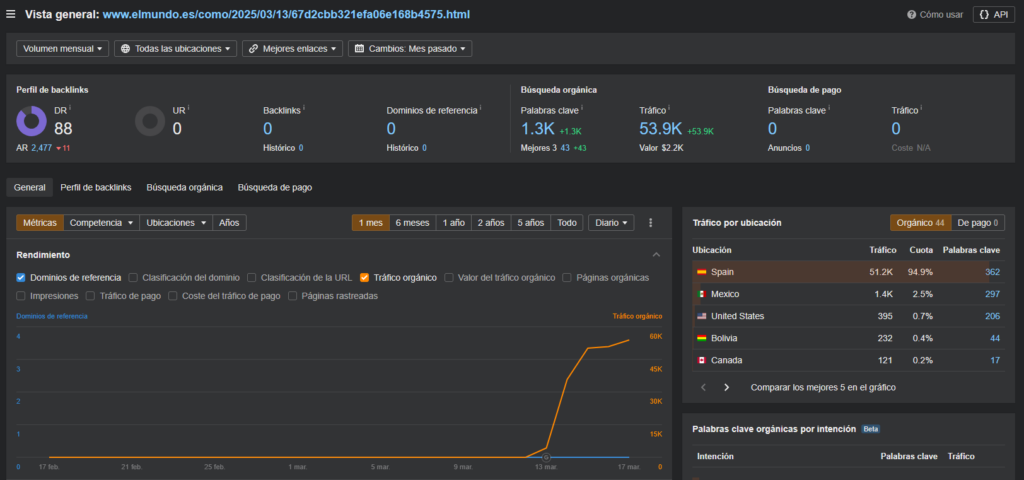
That’s not an outlier. It’s the kind of result you get when you choose the right outlet, optimize the content for the right intent, and publish at the right time.
Gift idea roundups, in particular, have something going for them that other formats don’t: they combine traffic volume with high purchase intent. A user reading “the 10 best Father’s Day gift ideas” has already decided they’re going to buy something. They just need someone to help them figure out what.
How to put this into practice with Growwer
Everything we analyzed in the El Corte Inglés case study — and everything we shared last year — comes down to the same thing: execution depends on publishing in the right outlets, at the right time, with the right content.
That’s exactly what Growwer lets you do.
If you have a brand or an eCommerce store
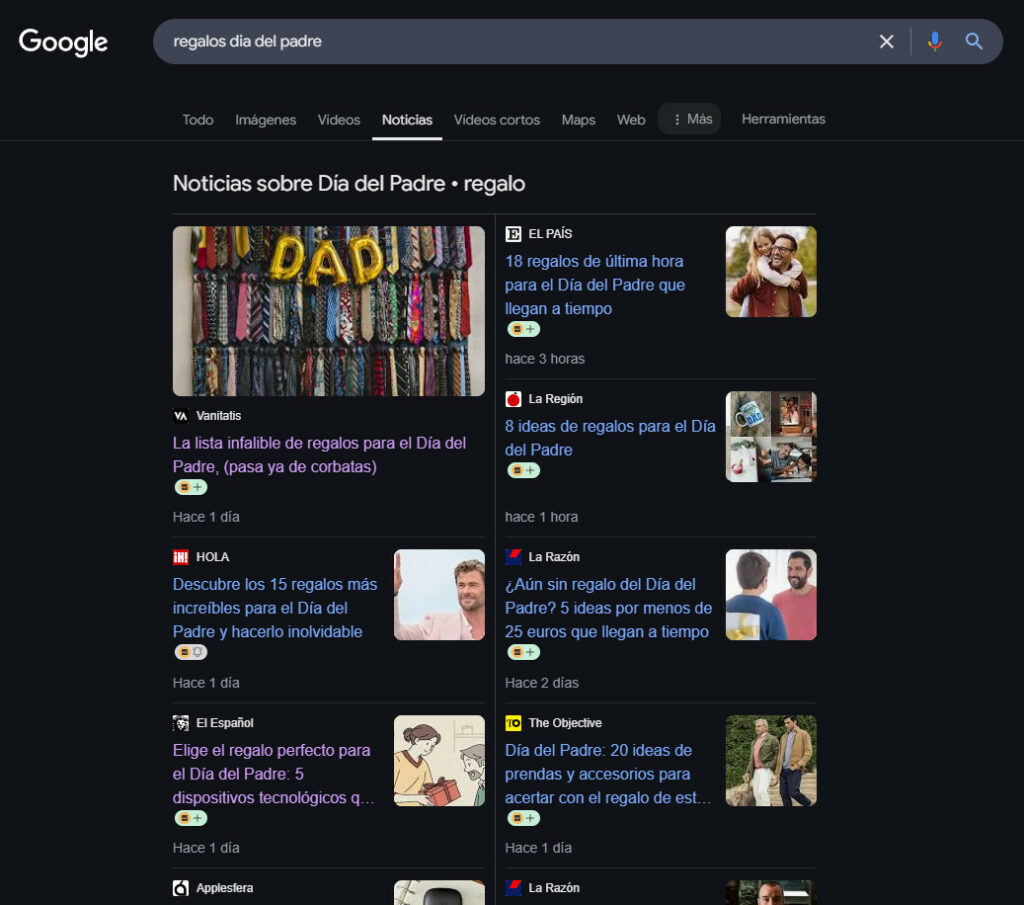
The goal is to get featured in roundups on outlets that are already ranking for the highest-intent Father’s Day keywords. Outlets like El País, La Razón, El Español — and hundreds of others available on the platform — that concentrate qualified traffic around these dates and can naturally include your product within their editorial content.
You don’t need to build content from scratch. You just need to be where your potential customer is already looking.
If you run a blog or a low-authority site
The evergreen strategy that El Corte Inglés runs on its own domain is available to you too — but it takes time and accumulated authority to pay off. The most effective short-term alternative is actually the opposite approach: publish on outlets that already have that authority and tap into their traffic.
You can place an article or a sponsored insert on relevant outlets in just a few minutes through Growwer. And with the free Growwer Chrome extension, you can check available outlets while you browse and add them directly to your favorites list.
If you don’t have time to manage any of this
Our managed service handles the entire process: outlet selection, negotiation, copywriting, and publication of content optimized for your vertical. No lock-in, no hidden fees, a dedicated account manager, and full transparency on every decision. Campaigns starting at $500.
Get in touch and we’ll onboard you as a managed client so you can get started before the traffic spike hits.
Father’s Day doesn’t wait. The brands that will be showing up in first position when your potential customer searches for the perfect gift have already been working on it for weeks. The good news is that you still have time.