SEO is no longer just about getting a page to rank on Google. Brands also need to become sources that AI systems want to use, understand, and cite.
The report AI Is Your Audience: Making Your Content Soar, produced by Notified and PRWeek, analyzes more than 250,000 press releases and nearly 250 million AI citations, identifying four key factors: Structure, Originality, Authority, and Recency (SOAR).
Sources are now part of the SEO strategy
When a user asks ChatGPT, Gemini, Perplexity, or another AI-powered search engine a question, the system doesn’t simply display a list of links. It builds an answer from multiple sources of information and selects those it considers most relevant to the query.
This changes one of the traditional questions in SEO.
It’s no longer enough to ask: “How do I rank for this keyword?”
You also need to ask: “What information about my brand exists online, and which sources can an AI use to talk about it?”
This is where external sources become increasingly important: media outlets, industry publications, research, reports, interviews, experts, and other independent websites.
The Notified and PRWeek report focuses precisely on the need to create content that AI systems can easily understand and retrieve. To achieve this, content needs to make it easy to identify what is being claimed, who is making the claim, what evidence supports it, and when it was published.
This makes external visibility an increasingly important part of the equation.
And it’s not just about earning links. A mention in a specialized publication can provide context, authority, brand recognition, and topical relevance.
That’s why SEO and PR are increasingly working toward a shared goal: creating information that others want to reference, cite, and use as a source.
The 4 SOAR variables that can make the difference
The framework proposed by Notified and PRWeek distills this strategy into four variables: Structure, Originality, Authority, and Recency. Together, they form the SOAR model, which outlines the characteristics content needs to be relevant in the generative search ecosystem.
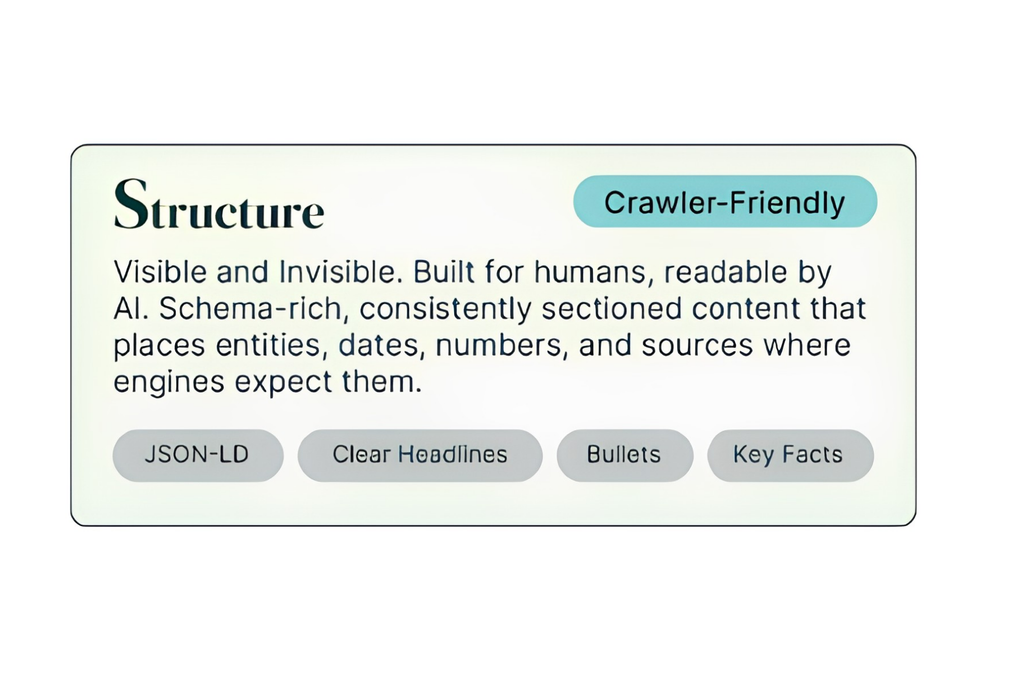
1. Structure: Make it easier for AI to find the information
A piece of content can contain excellent information, but if the key data is buried in overly long paragraphs or ambiguous headings, it becomes harder to identify what really matters.
That’s why content should have a clear and logical structure.
Descriptive headlines, informative subheadings, specific data points, dates, figures, entity names, and context all help content be interpreted quickly.
This doesn’t mean writing exclusively for machines. A strong structure also improves the reading experience.
The key is to make sure that both a person and an AI system can quickly answer basic questions: what happened, who is involved, what evidence supports it, and why it matters.
2. Originality: Provide information that can’t be found everywhere
In an environment where any company can use AI to generate hundreds of pieces of content, publishing more no longer necessarily means providing more value.
If a hundred pages explain exactly the same thing, creating page number 101 is unlikely to turn a brand into a differentiated source.
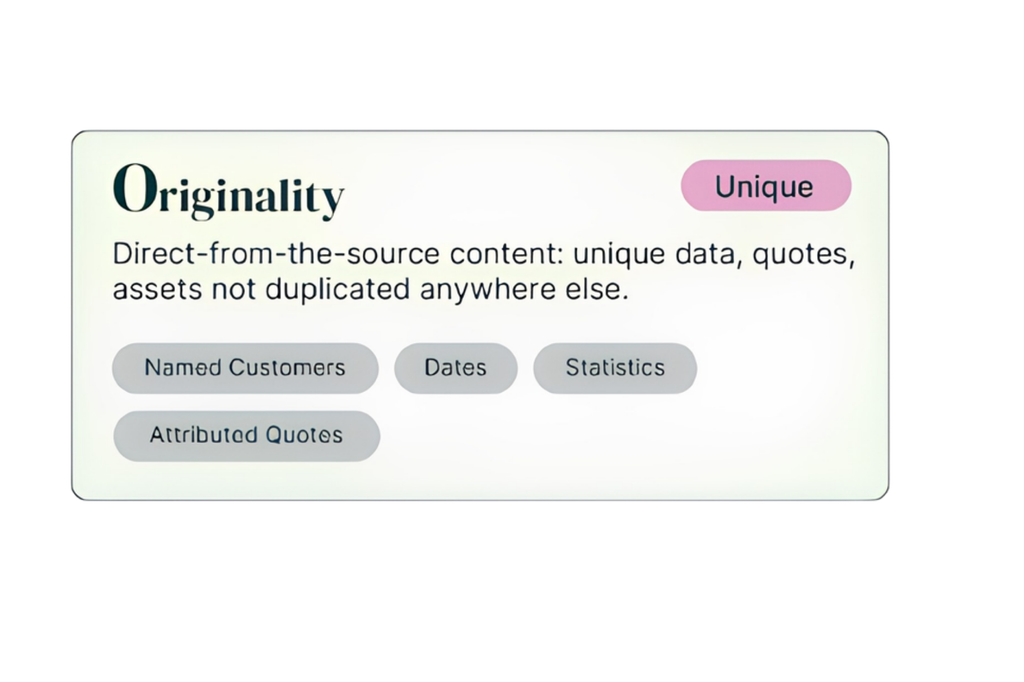
The opportunity lies in providing original, first-party information.
This could include:
- Internal company data.
- Research and studies.
- Surveys.
- Trend analysis.
- Real-world cases and experiences.
- Expert opinions.
- Proprietary statistics.
- Insights gathered from customers or projects.
The competitive advantage lies in creating information that can’t be easily replicated.
For a content strategy, this means looking inside the company and asking what unique information you can bring to the table.conocimiento tiene que todavía no está disponible públicamente.
3. Authority: show why you should be trusted
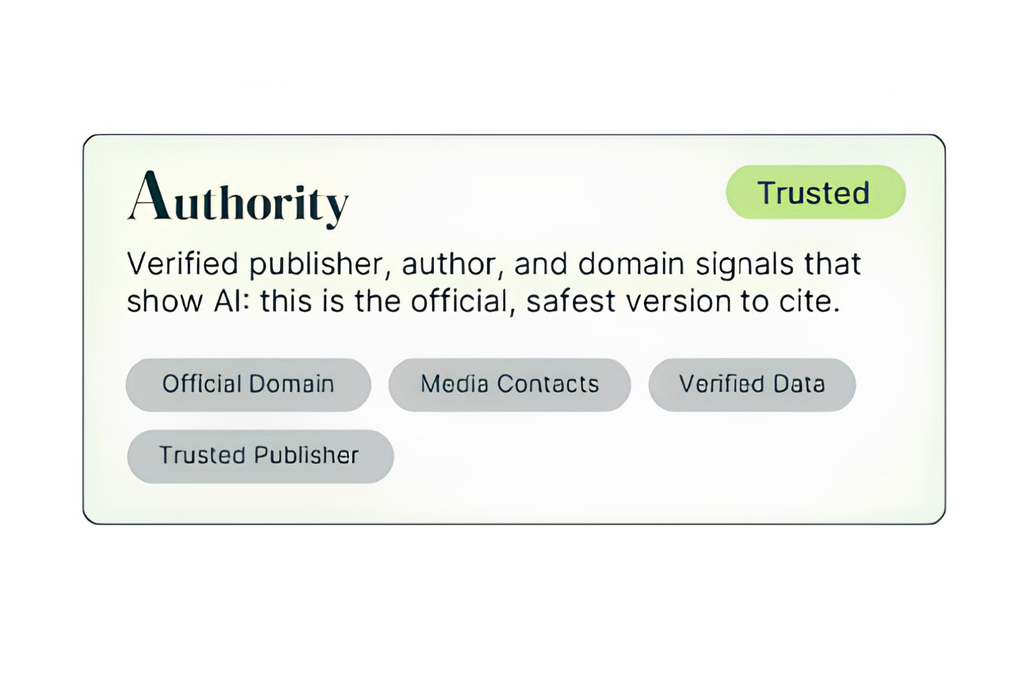
Any company can claim to be an expert in a particular field. However, that claim becomes far more valuable when it is backed by data, sources, experts, and external recognition.
That’s why authority isn’t built solely through a company blog.
It is also built through media coverage, industry publications, external studies, interviews, collaborations, and expert mentions.
This is where the connection between SEO and PR comes into play again.
A brand looking to gain visibility in generative search needs to build a consistent presence across multiple sources, rather than limiting its efforts to optimizing pages on its own domain.
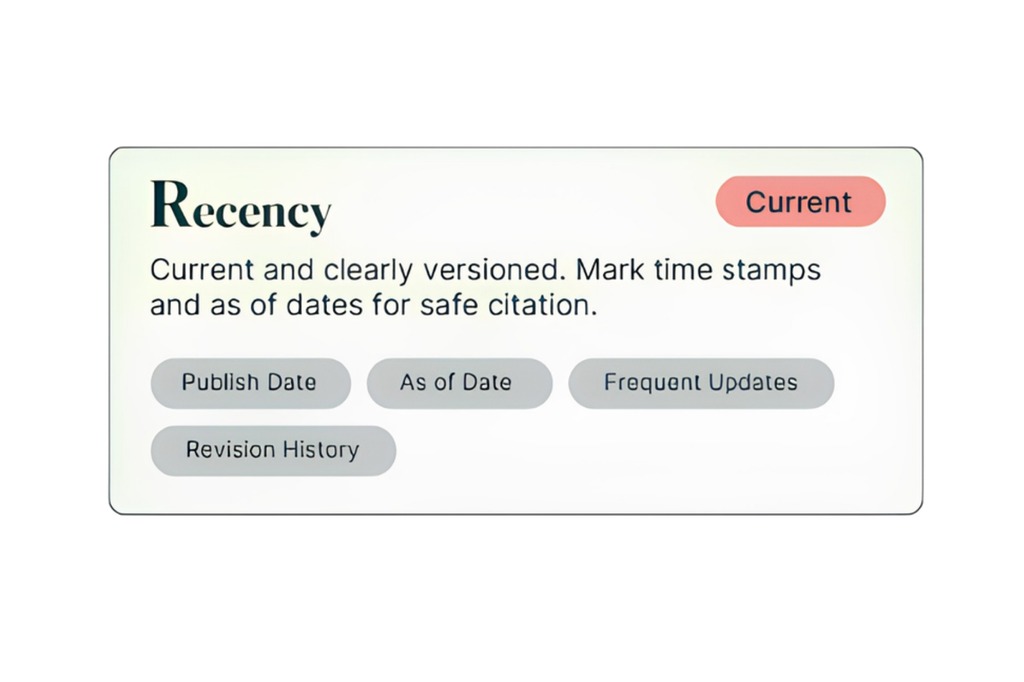
4. Recency: Keep your information Up to Date
In fast-moving industries, content published several years ago may have lost much of its usefulness.
A statistic may be outdated, regulations may have changed, or a trend may have evolved.
That’s why updating content should be part of your SEO strategy.
But updating doesn’t simply mean changing the publication date.
It means reviewing data, incorporating new sources, adding recent information, and adapting conclusions to the current context.
The goal is to ensure that the content remains a useful source when someone — or an AI system — searches for information on the topic.
How this changes the SEO paradigm
SOAR points to an important transformation: SEO is no longer focused exclusively on pages and keywords; it now also encompasses building authority and a body of information around a brand.
Previously, the primary goal was to get Google to consider a URL relevant for a particular search.
Now there’s an additional question to consider:
Does my brand have enough authority, original information, and topical presence for an AI system to use it when building an answer?
This doesn’t mean traditional SEO is disappearing. It’s expanding.
Organic search, content, link building, PR, digital reputation, and GEO (Generative Engine Optimization) are increasingly becoming part of the same ecosystem.
The goal is no longer simply to earn a click.
It’s to make sure the brand becomes part of the answer.
How should brands respond from now on?
The strategy can be summed up in seven actions:
- Create original data: Turn your internal knowledge into research and proprietary statistics.
- Improve your content structure: Make it easier for users and AI systems to find the information that matters.
- Build external authority: Seek visibility in the media and industry publications.
- Reduce generic content: Prioritize distinctive information over volume.
- Keep your content up to date: Regularly review data, sources, and conclusions.
- Bring SEO and PR together: Work on mentions, reputation, and authority—not just links.
- Measure your AI visibility: Track when and how your brand appears in generative AI responses.
The fundamental shift is simple: it’s no longer enough to create content to rank. You need to create sources worth citing.
And in an Internet where producing content is becoming increasingly easy, having something original, relevant, and verifiable to say can become the real competitive advantage.
Take the Next Step — We’re Here to Help
For years, we’ve helped thousands of brands build authority through our managed service.
Earning editorial mentions in relevant media outlets not only strengthens brand awareness, but can also become one of the keys to building sustainable visibility in AI Overviews and AI Mode.
With a dedicated SEO manager and a strategy built entirely around your goals, tailored to your pace and your project, with complete transparency and security. Starting at €500.