If all this sounds a bit unfamiliar, don't worry: at Growwer we are going to tell you what a content map is so that you know everything you need to know about this topic. We will give you the definition of a content map, but we will also tell you how to make one, and even give you examples so you can see it with total clarity. You won't be able to live without this great ally!
Discover what a content map is
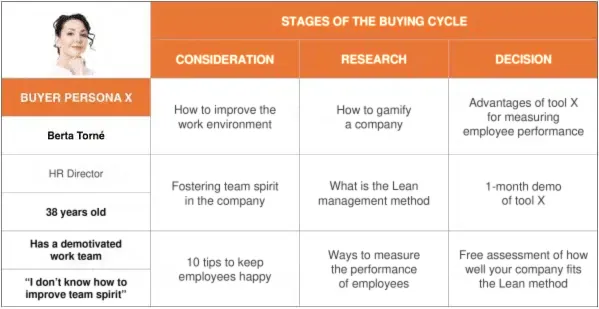
A content map is the digital marketing tool used to determine which content to use for each type of user, depending on the stage of the buying cycle the user is in. It sets out all the content that will be used to achieve the greatest possible personalization for the different profiles that may exist within your audience.
By creating this rigorous outline you can plan all the content you have in a much more suitable way and adapt it to each buyer persona in the most strategic way to reach your goals of making sales or capturing leads. Used correctly, it can be a very beneficial tool.
The advantages of content maps
To understand how useful this tool is, let's look at the advantages a content map can give us:
- Get to know your customer better: building a content map involves creating one or more buyer persona profiles to target your content at, and this will be a great help in understanding how your target audience behaves.
- Get an overall view of your content: when you lay out all your content in the preliminary phase, you are taking a sort of inventory that helps you know everything you have and see its potential.
- Reach your target audience: by studying your audience and the content you are going to use, you will make sure you reach the right people, the ones who are truly potential customers.
- Prioritize and organize your content: you will have the chance to provide the right content at each moment without overwhelming your audience, and you will also have it classified and much better organized so you can act strategically.
- Guide customers through the sales funnel: you will be able to reach your audience at the most suitable stage and at the perfect moment, and guide them with your content toward the final purchase.
Steps to create a content map
If you are already convinced that creating a content map can be a great tool for your digital marketing strategy, now you just have to follow the steps below.
Define your buyer persona
A buyer persona is a way to represent your customer. You build it by creating a fictional profile based on an analysis of real data about your potential customers, which will help you get to know them much better.
To do it in an organized way, you may find it very useful to write the data down on a sheet, making a sort of profile card that contains the following information:
- Demographic data.
- Current job and level of education.
- Personality traits, character, religious beliefs, lifestyle, etc.
- Daily challenges, such as the fears or problems they face.
- The influences that shape them: media, websites, books, etc.
- Their buying habits: when or where they buy, who makes the decisions, how long it takes them to decide on a purchase, etc.
- The sources of information they consult.
- Hobbies.
You can add all the details that help create a profile as precise as possible. It can also be very useful to create several, since your target may extend to more than one type of audience.
Analyze the buying cycle
The stages a customer goes through before finally making a purchase are known as the buying cycle, and analyzing these stages until you can map out the cycle can be very positive: it is the second important step in creating a content map.
In its most basic form, the cycle can be broken into three stages called discovery, consideration and decision. However, there is another, more complete way to break it down that is adapted to today's customer and follows these stages:
- Discovery, when the user learns about the brand.
- Engagement, the customer is attracted and connected with through content.
- Consideration, the consumer evaluates the best option before finally making the purchase.
- Decision, when the purchase is made.
- Post-purchase, a follow-up is done after the purchase to ensure customer satisfaction.
The right content for each buying stage
How do you decide which content is most suitable for each buying stage? If you don't know where to start, here are a few tips to help you make these decisions.
In the discovery stage, you will need to make the brand known and help the customer resolve any doubts.
- Buying guides
- Infographics
- Videos
- Blog posts that answer questions
- Social media posts
In the engagement stage, you need to connect with the customer and build some rapport.
- Interactive content
- Short videos with valuable messages
- Getting them to subscribe to the newsletter
- Engaging blog posts
In the consideration stage, you need to help the customer resolve their doubts about the products and the buying process.
- Opinions and reviews
- Product landing page
- Case studies
- E-books
- Videos
In the decision stage, you must provide the necessary information.
- FAQ section
- Sales landing page
- Free trials of services or products
- Sign-up page
In the post-purchase stage, the goal is customer satisfaction and getting them to buy again.
- Satisfaction surveys
- Product user guides
- Discount coupons for future purchases
- Newsletters
Review your content
Once you know your customers' profiles well and the stages they go through to make their purchases, it is essential to analyze and review the content you have available. Remember that it will be easier than ever, since your content is now classified and you can stop and think it over.
Ideally, you should include details about each piece of content and write a short summary so you can see everything clearly, for example by laying it out in an Excel sheet so it can be seen at a glance.
Create the content map template
If you have followed all the steps, it means you now have a clear picture of your customers' behavior and your content is classified. Now you just have to fill in each stage of the buyer’s journey with its respective content, or build your own template, more personalized and focused on your brand.
To create this content map template with all the data from the previous steps, you just need to open a spreadsheet, or you can use a design tool you know well or find appealing, which will let you do it with a more attractive, personalized design in case you have to present it at a meeting with your marketing team.
The best content for each stage
To finish your content map, you just have to carefully choose which content will work best in each stage. You will do this by reviewing the features of the user profiles together with the qualities of each stage, with all the data on the table.
Once you have assigned it, you must review everything. This is very useful to keep any stage from ending up weaker than the others, to make sure no gap is left unfilled and to consider one last time whether it is truly the best position for your content. If you have made it this far and the map has passed this final sign-off, your brand will be ready to improve its strategy.
If you don't have much time to carry out all these processes or you find them somewhat confusing, you can always ask for professional help. All our experts are at your disposal to create the ideal content map, as well as to write whatever content is needed and boost your brand all the way. Your customers will be more satisfied and you will reach a wider audience in very little time.
Content map example
A content map is a powerful tool for organizing and visualizing the content strategy of your website or blog. With a content map, you can identify and plan the type of content that should be created, when and where it should be published, and how it should be promoted to reach your marketing goals.
For example, a fashion company may have a content map that includes blog posts about the latest trends, social media posts about new products, and email newsletters with special offers. Each piece of content would be tied to a specific goal, such as increasing brand awareness, driving sales or improving customer engagement.
Creating a content map starts with identifying the goals of your content strategy. Next, you should define your buyer personas, which are fictional representations of your ideal customers. With them in mind, you can start planning the type of content that will resonate most with your target audiences.
The next step in creating a content map is to organize the content into categories and subcategories that reflect the structure of your website or blog. This can include sections for blog posts, products, news, tutorials and more. You should also plan when and where you will publish each piece of content to maximize its impact.
Finally, the content map should be reviewed and updated regularly to reflect the changing needs and preferences of your audience. This will ensure that your content strategy stays effective and relevant over time.