Written by Guillermo del Pino
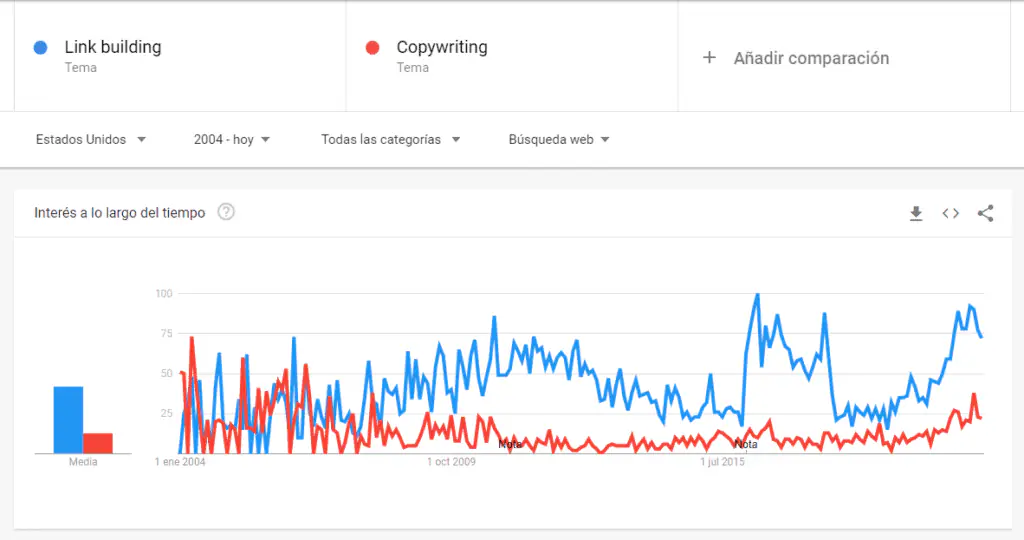
Does that mean links are more important than content? Not at all, but we do see that people are interested in the concept, and you know that when people get interested in a topic, it's usually because there's something behind it.
What is link building or link generation?
Broadly speaking, link building is the manipulation of the link profile a website receives in order to achieve our ranking goals.
To make it a bit clearer, there's an explanation I heard from Marc Cruells that I think simplifies it quite a bit, and it went more or less like this:
“If you walk into an auditorium hosting a medical conference and ask out loud, ‘Can you point to the best doctor in the room?’, the one with the most fingers pointing at him would probably be the one you'd choose for a medical appointment. The internet works more or less the same way.”
Why are links necessary to rank websites on Google?
All of this is great, but if you're not familiar with the concepts we're discussing, you might wonder who decided that links are necessary to rank better on the internet. The answer is Google, with its “Method for node ranking in a linked database”, the search engine's original patent, which Larry Page, one of its founders, filed on September 1, 1998. From this reasoning comes what is known as PageRank (a play on words, because it refers to ranking pages, but also to Larry's last name).
PageRank is a method designed to rank web pages by relevance in Google's SERPs, or listings. What it does is give a score to a URL based on the links it receives and the PageRank that each of those links has in turn.
As I once heard Cesar Aparicio say: the higher the probability that a user randomly browsing the internet will find that URL, the greater its chance of ranking.
Google discovers the internet through crawling
What Google does is visit all the content it finds on the internet, scanning it for new links, which it then visits in turn, and so on. Of course, it also revisits content it already knew about, looking for updates and possible new links.
It does all this through its spiders, or crawlers, and how often they visit each URL depends on factors such as PageRank, website architecture, loading speed, etc.
The crawler goes into each URL and adds the links it finds to a crawl queue, with a priority it determines based on many factors. Then comes the indexing process, where Google evaluates the page to add it to the index, and finally ranks it for certain keywords or search intents, also based on a great many different factors.
First steps with link building
What link building does is boost what you already have, so you'll need to look into concepts such as your own website's architecture to distribute all this external PageRank correctly and, of course, have good content that properly answers the user's intent.
For Google, the natural thing would be for links to come to our website on their own, just because of its quality, and this can happen in some sectors, for example if you've created a revolutionary free tool that helps many people with a daily task, but if you have, say, a motorcycle repair shop, it's hard for everyone to want to link to you.
Once you're clear that you're going to have to acquire links and you've organized your whole site well, the first thing you should research is the average for your niche (something Álvaro Peña usually puts a lot of emphasis on).
Using tools like Ahrefs or Semrush, you'll need to look at what's normal in your sector by checking your competitors' websites. Some points to look at are, for example, what percentage of Follow links and Nofollow links they have, the number of links, the type of linking domains, their authority, the anchor text percentage, etc.
Google “normalizes” a type of linking in each content vertical, and what works for a short story website doesn't necessarily work for a DIY one.
Something I heard from Luis Villanueva that I think is brilliant is that in a link building strategy, you should get the link on a site where you would look for it if Google didn't exist.
The normal thing in that hypothetical case, where people couldn't find you through the search engine, would be to try, for example, to appear in some relevant press outlets to announce the website's launch, and then perhaps also on websites closely related to your topic, so their target audience could become interested in your content.
Are all links worth the same?
Regardless of the strength of the domain that gives us the link, not all links are worth the same. In the previous point we already introduced the concept of Follow or no Follow. A link with the no Follow attribute doesn't pass authority; there's always debate about how useful it is, but it isn't worth the same as a Follow link.
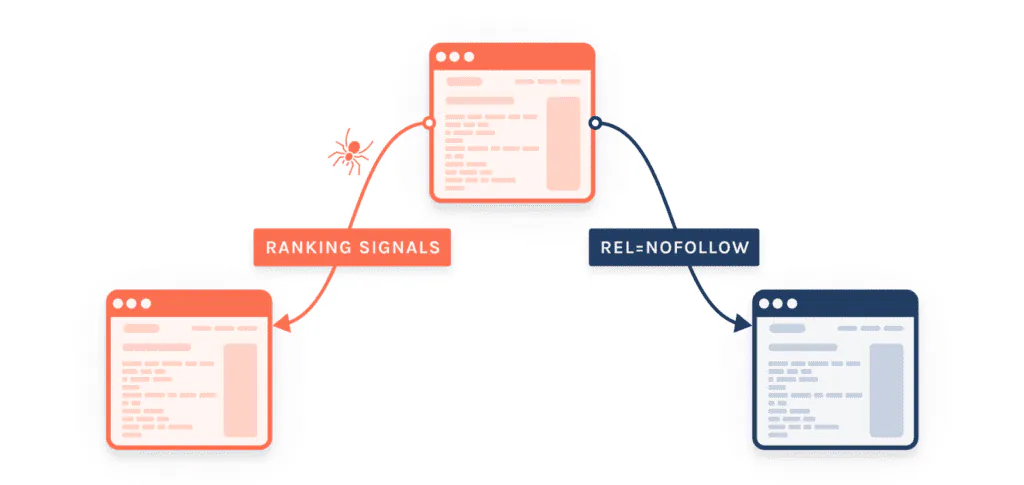
It's also important to know, for example, the area of the website where the link sits, whether it's contextual, surrounded by content related to yours, or, for example, in the comments, how closely the website's content matches yours, geolocation, and a long list of other factors.
Another thing to look at is the internal linking, within the website that links to us, toward the URL that is linking to us. Getting a link on a page that receives internal links from many others, even from the home page, the menu, etc., and is therefore also receiving PageRank, is not the same as getting one on an orphan page that isn't linked from anywhere.
What are tiers in link building?
Since we've talked about the concept of PageRank, we can try to clarify a bit what tiers in link building are, because sometimes it isn't entirely clear, and it's actually very simple.
Earlier, when we talked about PageRank, we said that what Google does with it is:
“Give a score to a URL based on the links it receives and the PageRank that each of those links has in turn.”
We can have a link on a very authoritative website with good internal linking, but if we also manage to increase the authority of the specific URL that is linking to us, that link will be worth even more.
Tiers are simply layers of links. For example, Tier 1 would be the links pointing directly to our “money site”, the website we want to rank; Tier 2 would be another layer of links that we could point at the Tier 1 links, and so on. We could create as many tiers as we saw fit. Is it essential? Honestly, no, but sometimes, and depending on the site, it can be worthwhile.
The most common link building strategies
As you'll have noticed by now, what we're looking for, always keeping in mind the average for our content vertical, is a link pattern that Google may see as natural and that tells it our website is growing in popularity. Some of the most common methods used for this are:
- Links in forums and comments: If a website is growing naturally, it's easy for other people to mention it in a comment on a related article, for example to add information, or in a forum to recommend it or to answer something someone is asking. That's why it's a type of link that is commonly built.
- Linkbaiting: This technique basically consists of creating “viral” or “linkable” content. You can use tools like Buzzsumo or Ahrefs' Content Explorer to sort articles on our topic by the number of links they've received and find ideas. One example would be a study with statistics that prove something and that other professionals might want to link to, lists recommending companies or professionals, etc.
- Buying links: Since it's clear that link building works, several platforms have been created, each with its own features, where we can find websites that sell the option of linking to us from them. We'll have filters to try to select the one that best fits our needs and has the highest possible quality.
- Broken links: Sometimes websites have linked to content that no longer exists, either because the domain has expired or because the content has been deleted or moved. We can look for these links on websites where we'd like to have a link and send them an email offering an alternative to that broken link with content from our website, or, if we want to play a bit more Black hat, we could, for example, register the expired domain and point it to our website with a redirect (careful: you need to know how to do these things properly, or not do them at all).
- Reclaiming mentions: Sometimes, for example if we have a well-known company, the press may mention us without giving us a link. We can find all these sites and ask them whether they could add it.
- Guest post: If you create really good content and know sites on your same topic that might be interested in having a post written by you, you can ask them to publish one in exchange for it carrying a link to your website.
- Automated links: There are tools that automatically log in to sites that allow links and create them, usually using spun text. This can work, for example, in a tiered strategy like the one we mentioned above, by sending these links to a fairly high tier, separated from our site by as many layers as possible, but once again I'm telling you to be careful with these things if you care about your website.
- PBN: PBNs, or Private Blog Networks, are networks of blogs you own but try to hide so Google doesn't detect that they all belong to the same person. The goal is for these sites to look independent of each other, to avoid penalties, and to use them to link to the websites we want to rank. For example, they're common in sectors where it's very hard to get links or where we want an edge over the competition with domains they'll never be able to get. They're usually built with expired domains that had already accumulated strength (Once again, careful, hehehe).
Different techniques for link building
As with everything, thinking outside the box in link building can help us get quality links or reach our ranking goals.
A couple of pieces of content I recommend you check out, not so you apply them to the letter, but so you understand what I'm talking about and give it some thought to come up with your own strategies, are:
- The Skyscraper link building technique: https://backlinko.com/skyscraper-technique
- Link building with Google Ads, by Ahrefs: https://www.youtube.com/watch?v=Uz2bGhdnJN0
Is link building always about getting more and more links?
Not always. For example, you might work for a brand that gets lots of links thanks to strong branding, such as Adidas.
It will typically get many links mentioning its home page, as you can also see if you run it through a tool like Ahrefs:
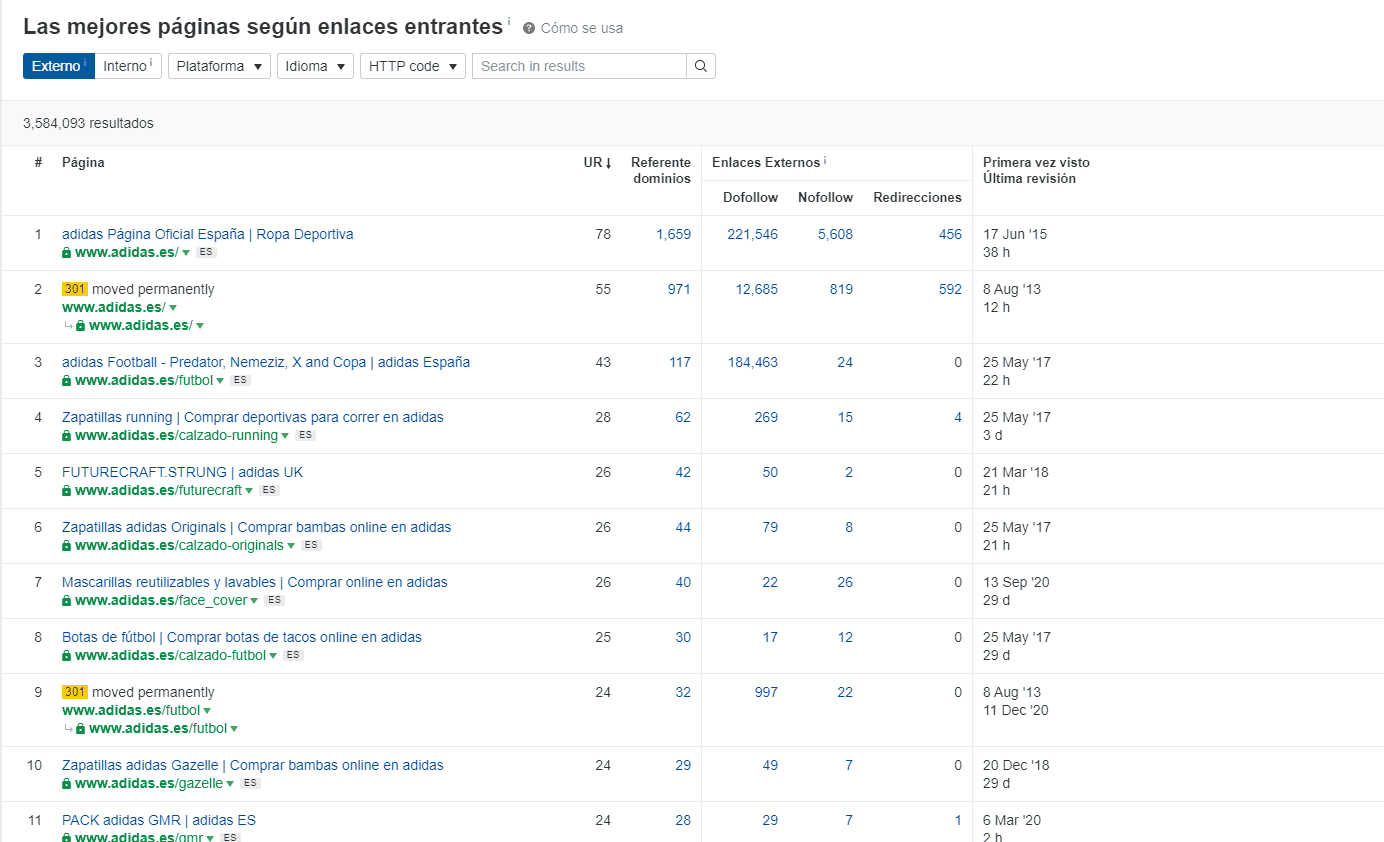
In cases like this, even though the domain is very strong, we'll have to work with what we already have, structure the website itself very well, and also build authority on pages such as product categories, where we could rank for more generic keywords like “sneakers”.
SEO never sleeps
SEO never stops: new things come up every day, updates, techniques, ways of working… We're reverse-engineering an algorithm that is constantly evolving, so everything I've tried to share with you can be a foundation, but what you absolutely have to do is make trial and error a way of life.
I hope this overview of link building has been useful, and if you still have any questions, see you on social media.
P.S. If you ever want to link to an article about link building, remember this one.

Guillermo del Pino
My name is Guillermo del Pino. I've been in SEO since around 2015 and working on it full-time since 2017. I've had my own projects, I've also seen many other people's, and I work in-house at Software DELSOL, a company that makes business management software. If you want to know more about me, you can follow me on Twitter (@guille_delpino) or take a look at my website, guillermodelpino.com.